

In 1989, the Replacements released a song with the lyrics, “You be me for a while, and I’ll be you.” Those words got me to ponder what it’d be like to temporarily be someone else? Being Hollywood’s most successful actor sound like a winner? Or how about becoming a gold medaled, Olympic-athlete? Maybe being royal would satisfy a fantastical life experience for some. I’d personally like to experience being Reese Witherspoon for a day due to her accomplishments: actor, author, and producer. She’s got a book tour, she’s beautiful and rich, however, I digress.
Contrarily, what if you were to swap lives with someone of a different gender, religion, or ethnicity? What about being a kid again and letting your kid be the grownup like in the movie “Freaky Friday?” Not quite as enticing is it? But it seems we may need to do just that to entertain being empathetic and potentially budge from our own rigid opinions.
It dawned on me this morning when I was getting ready for work the shirt I put on was a jewel-toned blue. I had scored a silk shirt of a favorite designer with tags on (!) from eBay. Strangely, the seller advertised it as purple. I realized the metaphor in that moment that each person sees things differently.
We each “see” based on our DNA, personal history, value system, and circumstances. Each of our views is limited in scope based on our location, both physically and mentally. It’s one of the reasons there are many referees on the field in college football. There is so much to see that it is impossible to assess from only one viewpoint. Watching games, we think we know what’s happened but after review, the head ref might change the call. It’s because he gets additional input from others on the field (and a camera or two). In that same vein, what if we attempted to understand others by taking in many different viewpoints before coming to our own opinions? Maybe we’d recognize we all want the same things and aren’t so different regardless our ethnicity, political beliefs, gender, or religion? Perhaps there would be less distrust and anger between us? It seems like a possible solution to all the polarization worldwide and even in my own home.

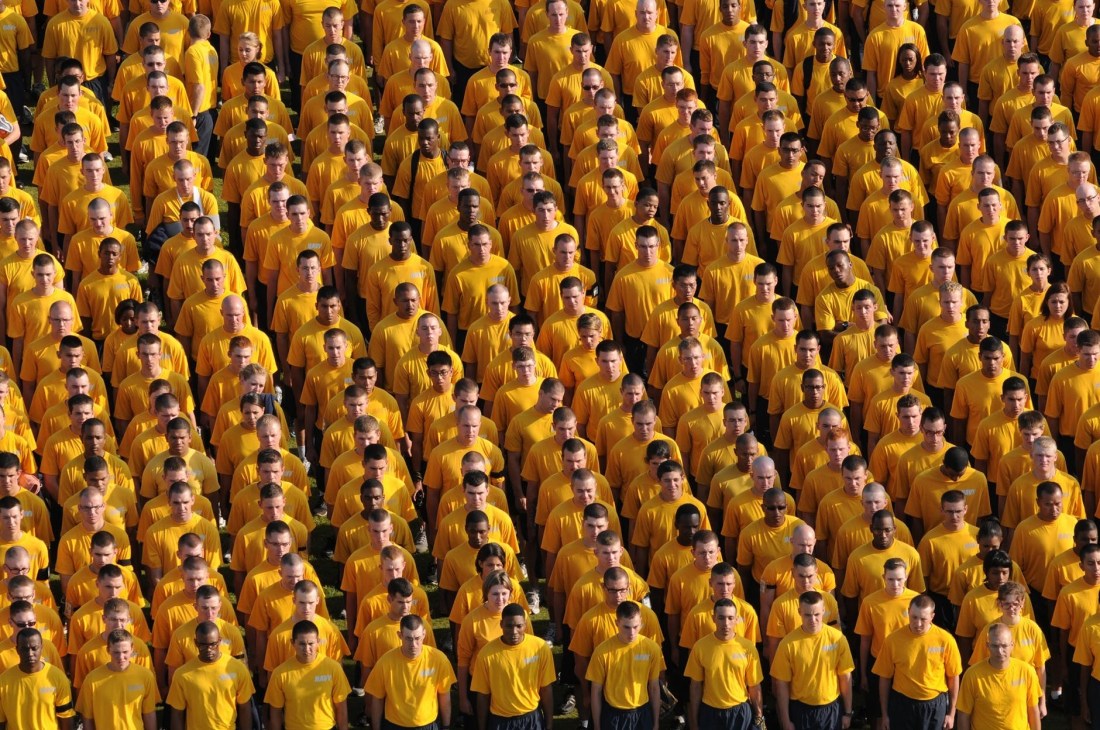 The first time I heard the term “PLU” was when I described a crowd. My sis-in-law said, “You mean PLUs.” I asked what that meant and she said, “People Like Us.” She nailed it. She wasn’t referring to people like her, but rather a group of similar people. The homogenous crowd I described WAS so alike I could have easily described one individual or the collective group and they seemed the exact same.
 Sometimes, we get what others might conceive as “the shaft.” Second place can seem like failure to some: very, very good but not quite good enough.
 Their mind bending words are,








 Fourundertwo